An end-of-line cell prepares several pallet patterns from identified cartons. This scenario addresses flow, gripping and recipes. Trials establish the formats that can be accepted and the actual behaviour of the installation.
Production requirements
Context to assess.
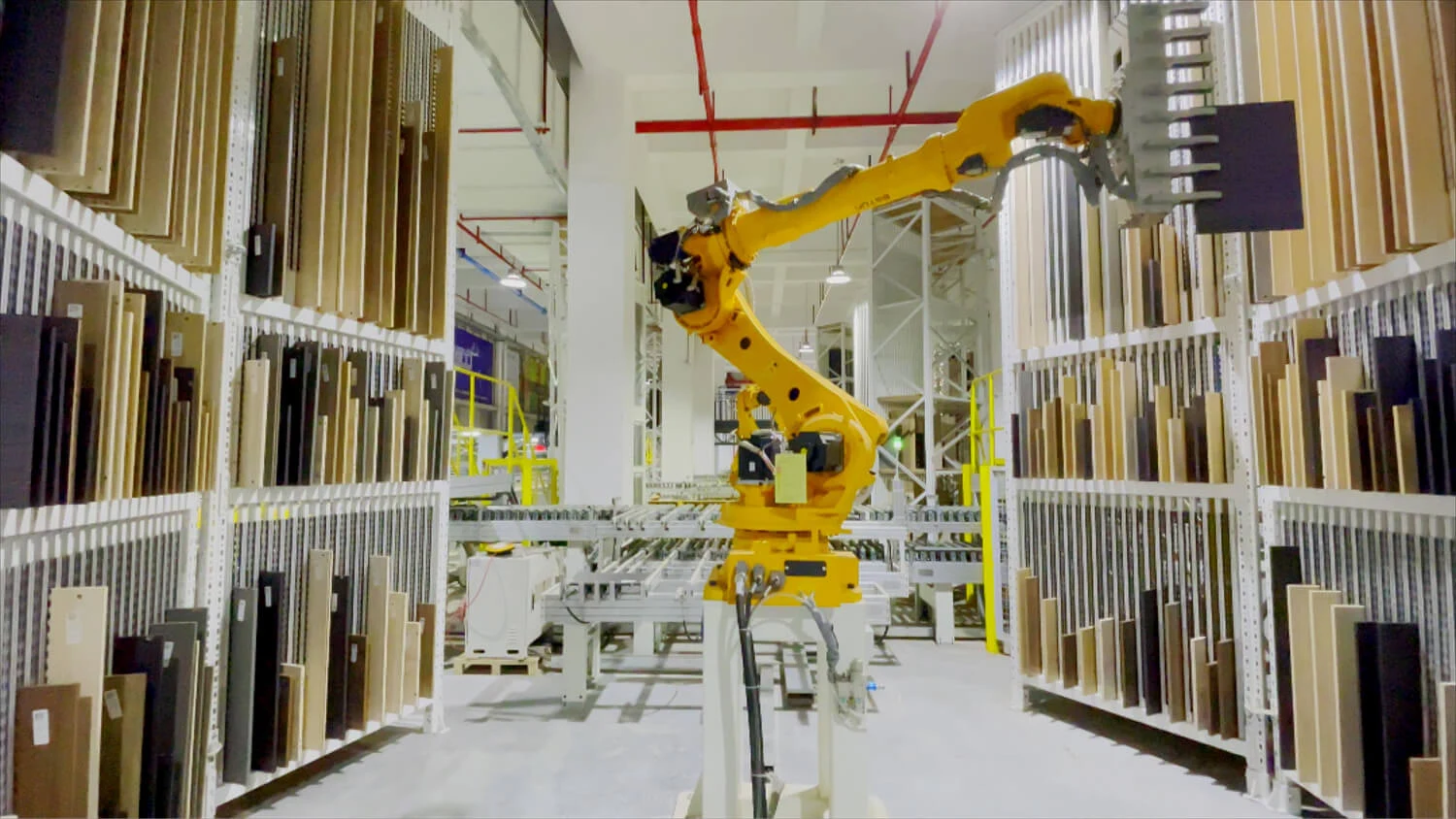
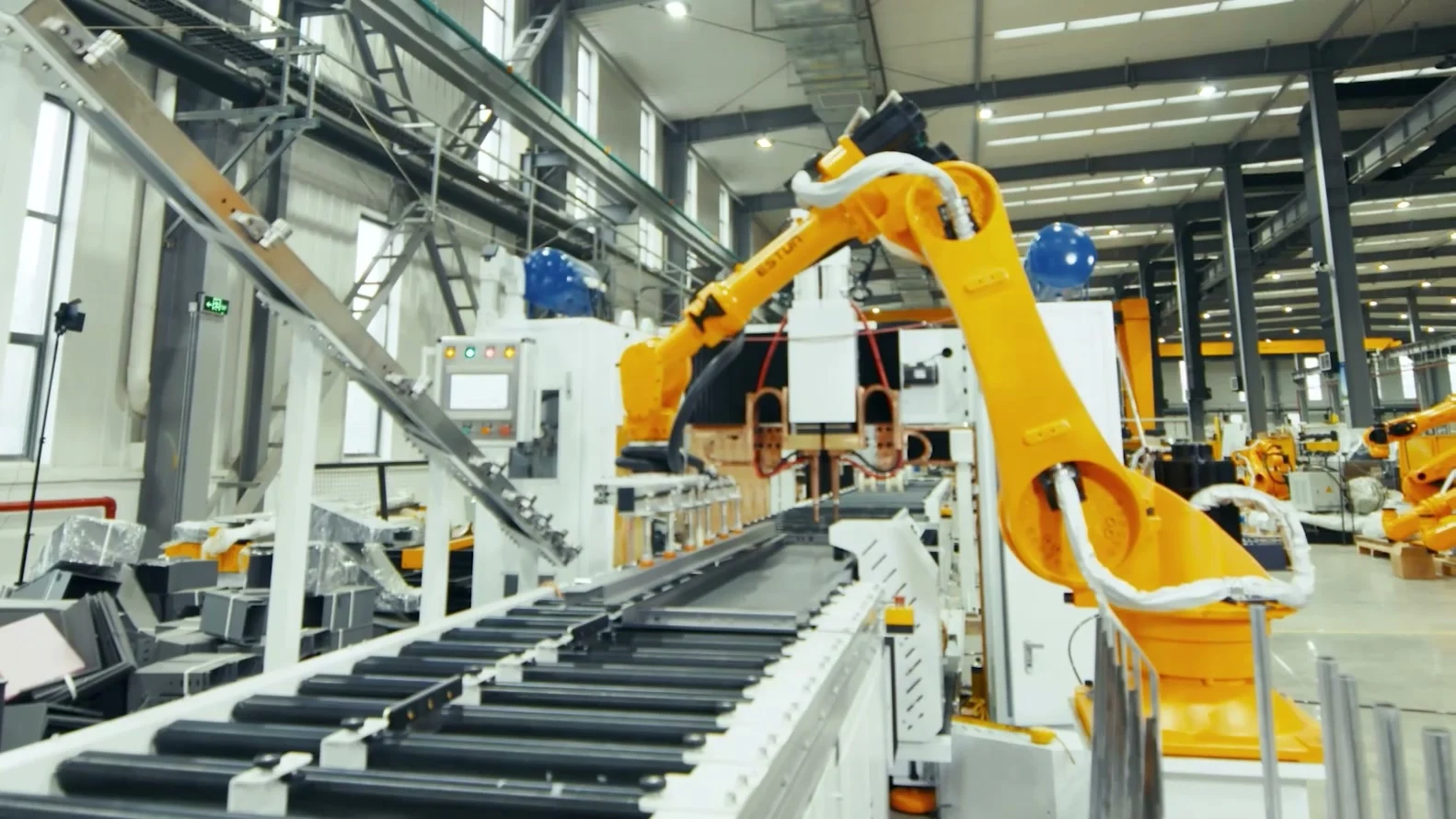
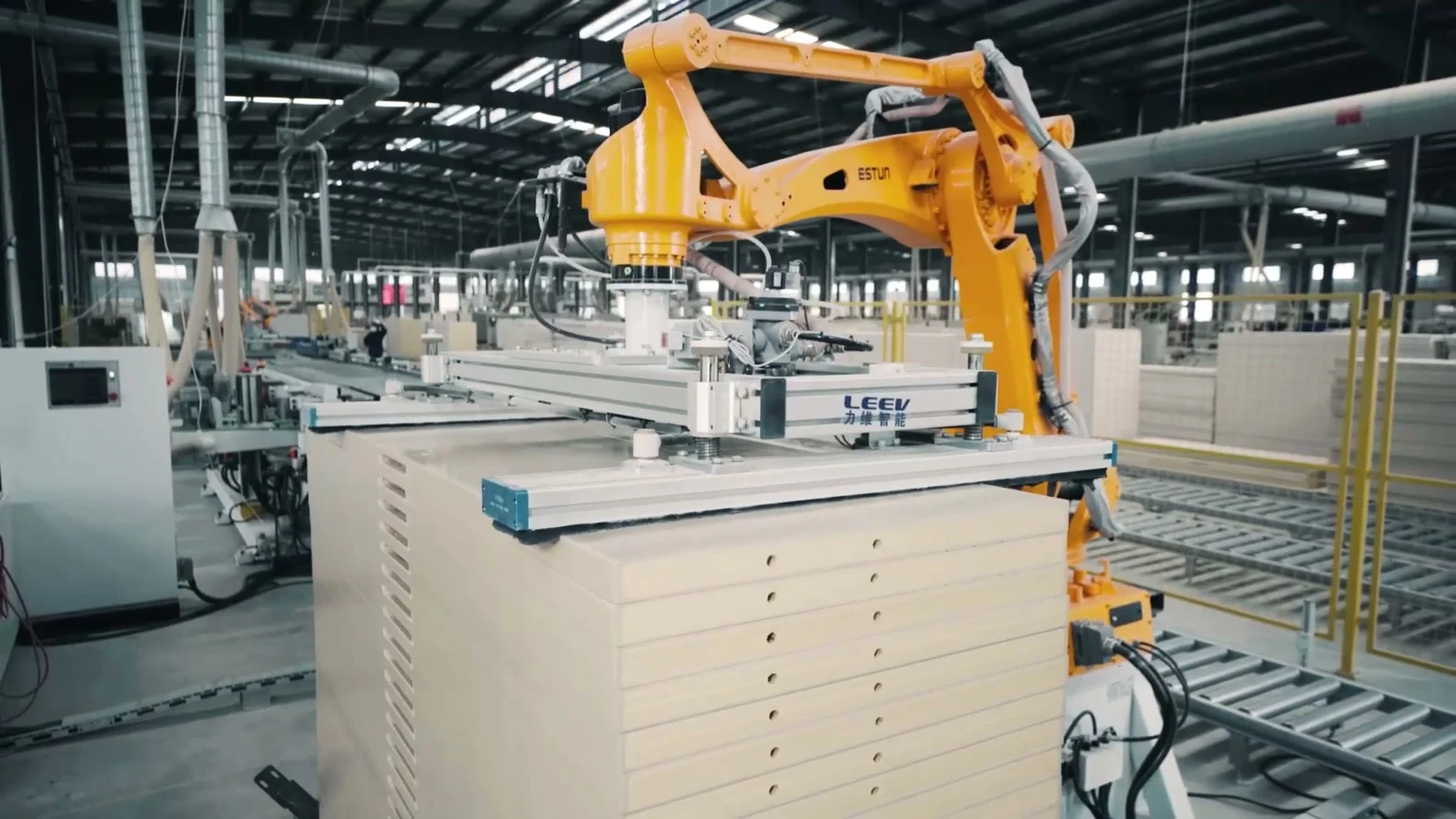
The cell receives oriented cartons on a conveyor and places them according to a selected recipe. It also manages empty pallets, completed pallets and interrupted flow. The project begins with a line survey and gripping trials. The manufacturer image shows panel stacking: it illustrates the handling principle, rather than this carton configuration or a Vanguard customer.
Information to gather.
- Provide every format with dimensions, maximum mass, material, stiffness, closure and surface condition. Include deformed or incomplete cases that the line must detect.
- Define pallets, permitted heights and overhang, layer patterns, any slip sheets and the stability criteria to check.
- Survey infeed, accumulation, outfeed, handling access and recipe information. Specify expected behaviour when a pallet position is unavailable.
Cell components.
Compare an ER60-2000-PL-CE and an ER180-3100-PL-CE against the layout. The latter specifies 180 kg and 3,060 mm, a value distinct from its model name.
Design the gripper after trials: suction, clamping or support suited to the package. Its mass and any multi-pick load enter the load calculation.
Connect conveyors, carton detection, pallet positions and line PLC. Identify recipes and access permissions; a presence signal does not replace a safety function.
Operating sequence.
- Check the active recipe, incoming format and destination availability before releasing a carton to the pickup point.
- Verify gripping, move the package and confirm placement in the required position. Update the layer count only after confirming that step.
- When a pallet is complete, request removal and wait for a confirmed empty pallet. Following manual removal, check the physical layer before resuming the recipe.
Define acceptance.
- Run the agreed layer patterns with every selected package, then examine grip retention, damage, placement and stability under the protocol.
- Test missing cartons, grip loss, absent pallets and recipe changes. Measure cycle time in these trials using an agreed measurement boundary.
References to assess.
These documented references support the initial selection. Payload with tooling, inertia, usable reach and options must be checked together.
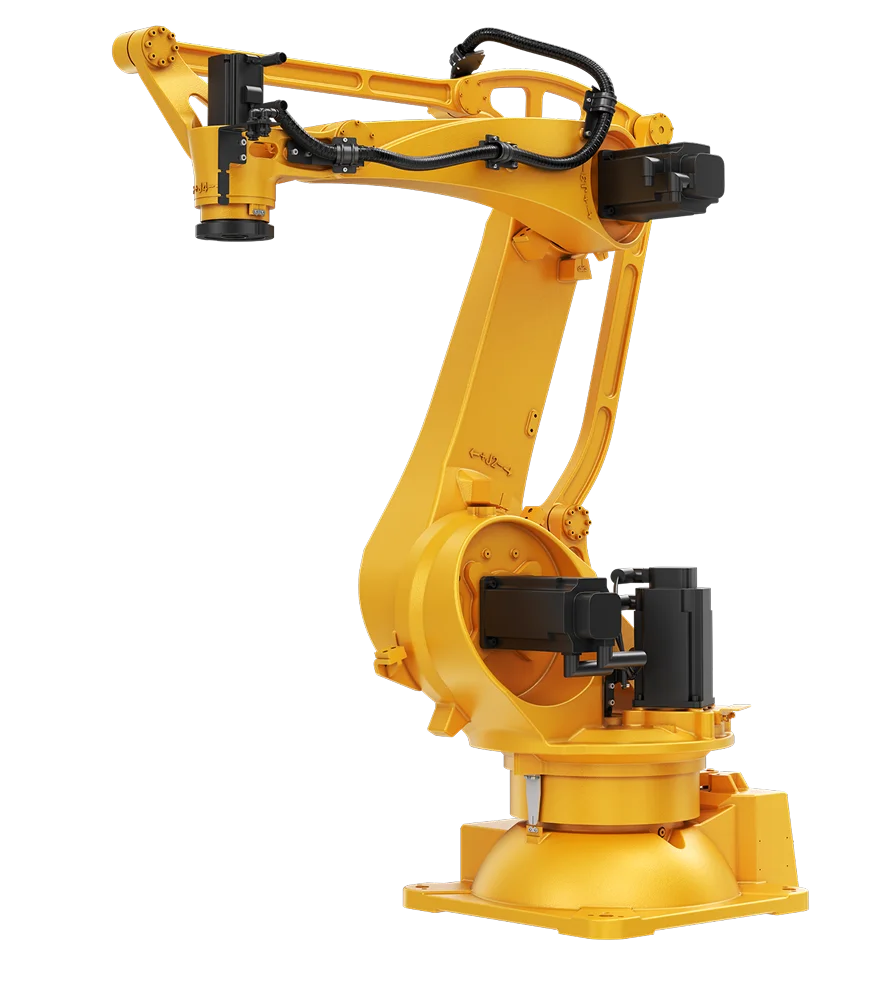 ESTUN ER60-2000-PL-CE
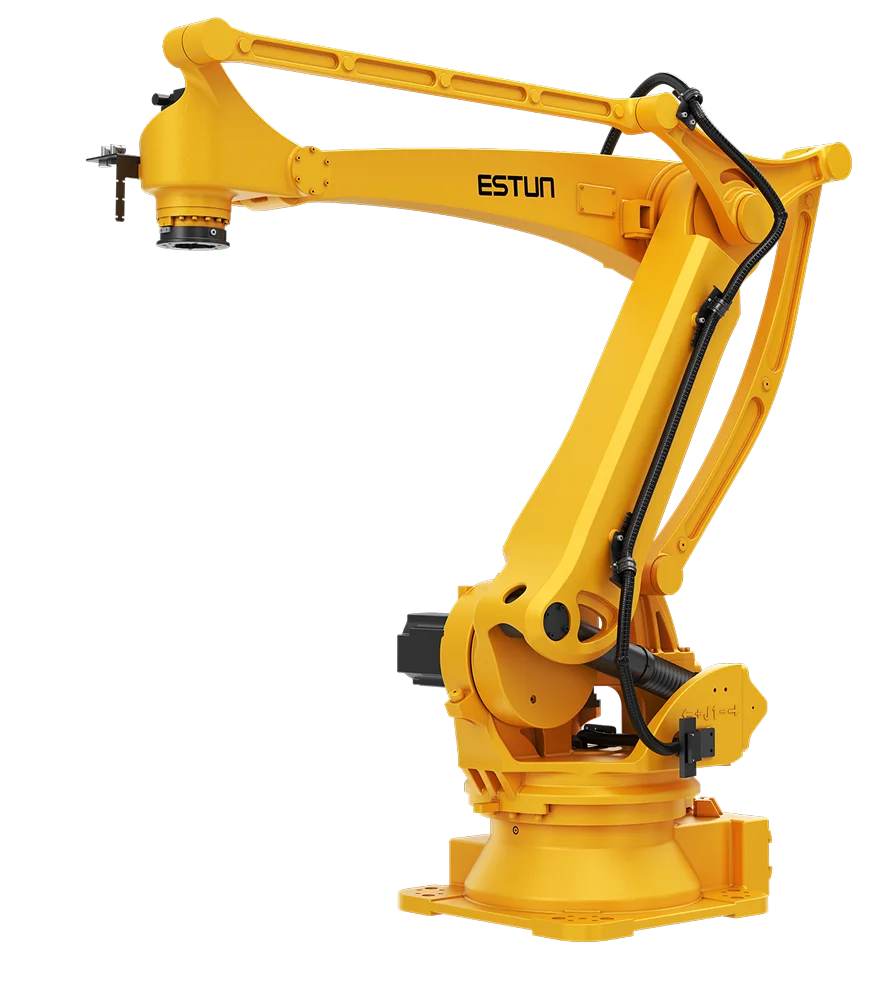 ESTUN ER180-3100-PL-CE
Common questions
Points to clarify.
Can formats change without rewriting the program?
Recipe management can be designed for qualified formats. A new package requires checks of gripping, layer patterns and paths.
Can the robot pick several cartons?
That option must be studied using actual packages. Total mass, stiffness, gripping and accessible positions need verification.