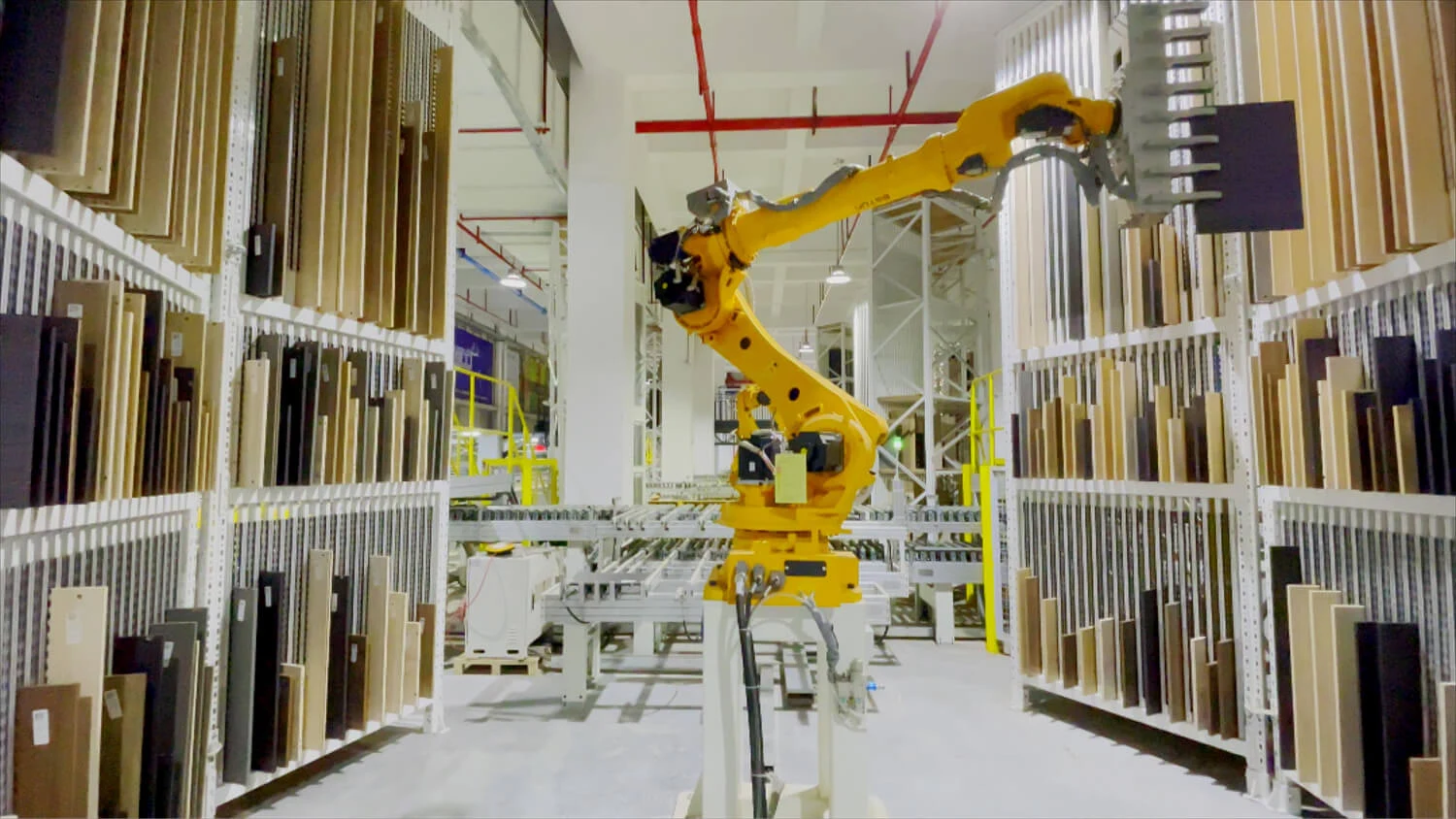
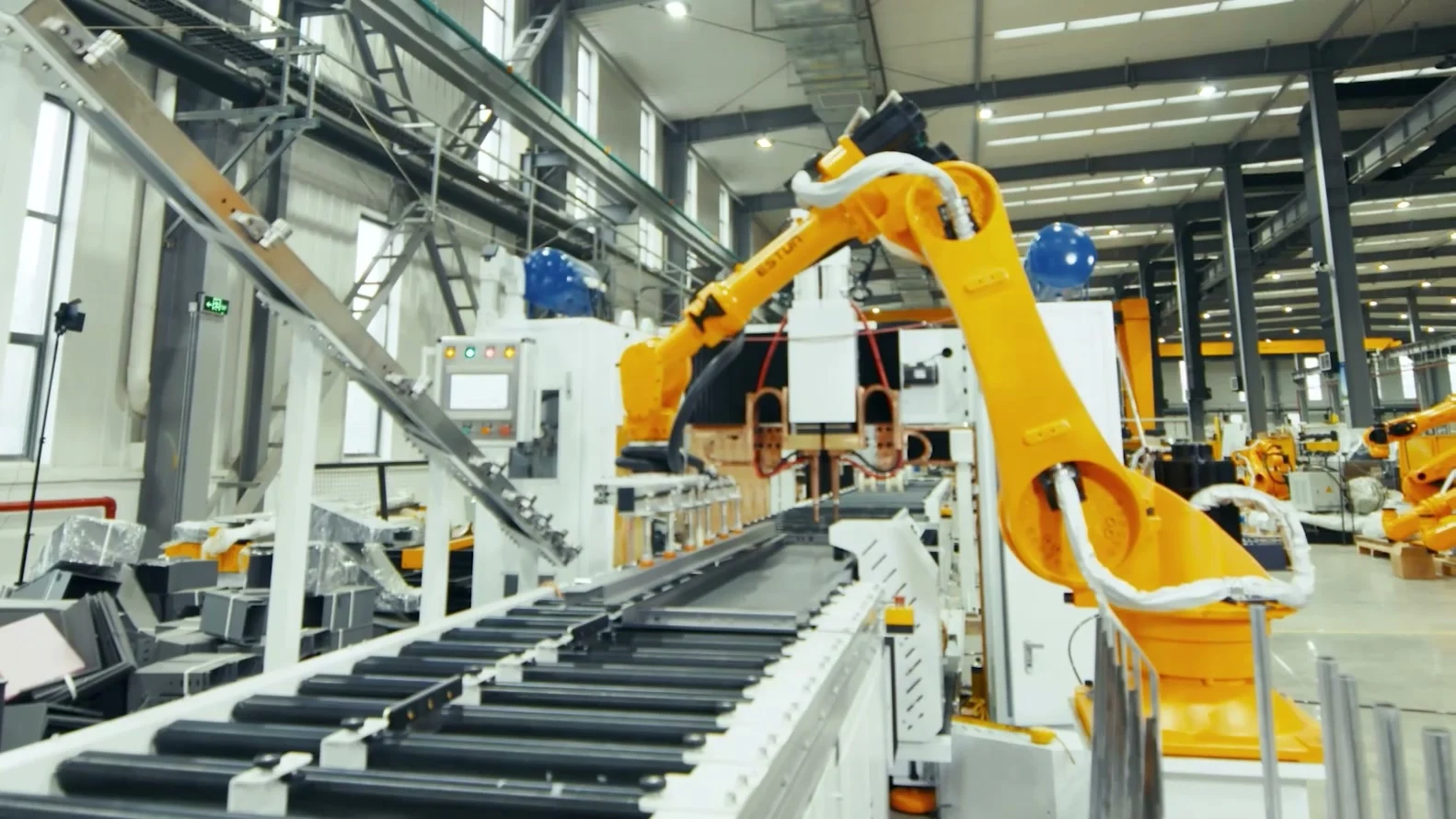
A cell loads blanks into a machining centre and removes finished parts. This scenario describes an architecture to study with the machine manufacturer. It is neither a customer installation nor an advertised production rate.
Production requirements
Context to assess.
The starting point is a link between blank storage, workholding and finished-part output. Access, swarf, batch changes and recovery after a stop often determine feasibility. Vanguard develops the sequence with the operator and CNC supplier, then checks the layout against actual parts. The manufacturer scene illustrates industrial transfer; it does not depict a Vanguard CNC installation.
Information to gather.
- Provide blank and finished-part drawings, masses, permitted gripping surfaces, tolerances and batch variation.
- Identify the CNC model, door, workholding, accessible positions and actual available signals, including supplier permission for changes.
- Describe replenishment, swarf and fluids, retained manual tasks, batch-change frequency and reject handling.
Cell components.
Assess an arm such as the ER20-1200-MI-CE, specified at 20 kg and 1,200 mm. Tooling, the part and applied loads then determine suitability.
Plan monitored gripping, indexed trays or magazines, an output area and, depending on trials, a cleaning or inspection station.
Define the CNC, robot controller and PLC handshake: access request, door state, clamping, cycle complete, fault and recovery state. Safety functions require their own design.
Operating sequence.
- Identify the recipe, check blank presence and confirm the grip before approaching the machine. A missing part prevents the next expected step.
- Wait for the agreed permissions, remove the finished part, check blank placement and confirm clamping before the robot withdraws.
- Place the part in a known location, record its status and prepare the next one. Following an interruption, reconcile physical and software states before an authorised restart.
Define acceptance.
- Test the agreed references with representative blanks, documenting gripping, positioning, preserved part quality and CNC handshakes.
- Exercise the faults defined in the protocol: missing part, unconfirmed clamping and power interruption. Verify diagnosis and return to a known state.
References to assess.
These documented references support the initial selection. Payload with tooling, inertia, usable reach and options must be checked together.
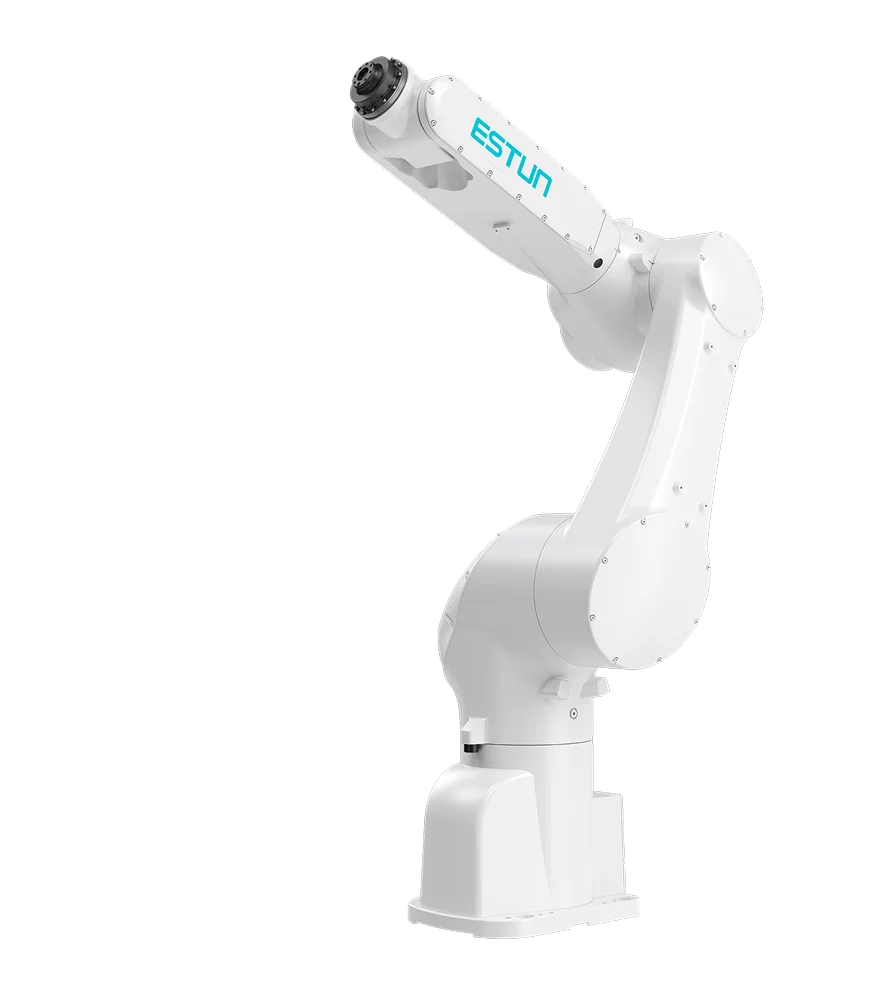 ESTUN ER20-1200-MI-CE
Common questions
Points to clarify.
Can the existing machine be retained?
That is a feasibility question: access, workholding and the interface need documentation. The CNC manufacturer must confirm permitted modifications.
Is a camera essential?
Not always. Indexed trays may suffice; vision is justified when position or part identity varies and trials confirm its suitability.