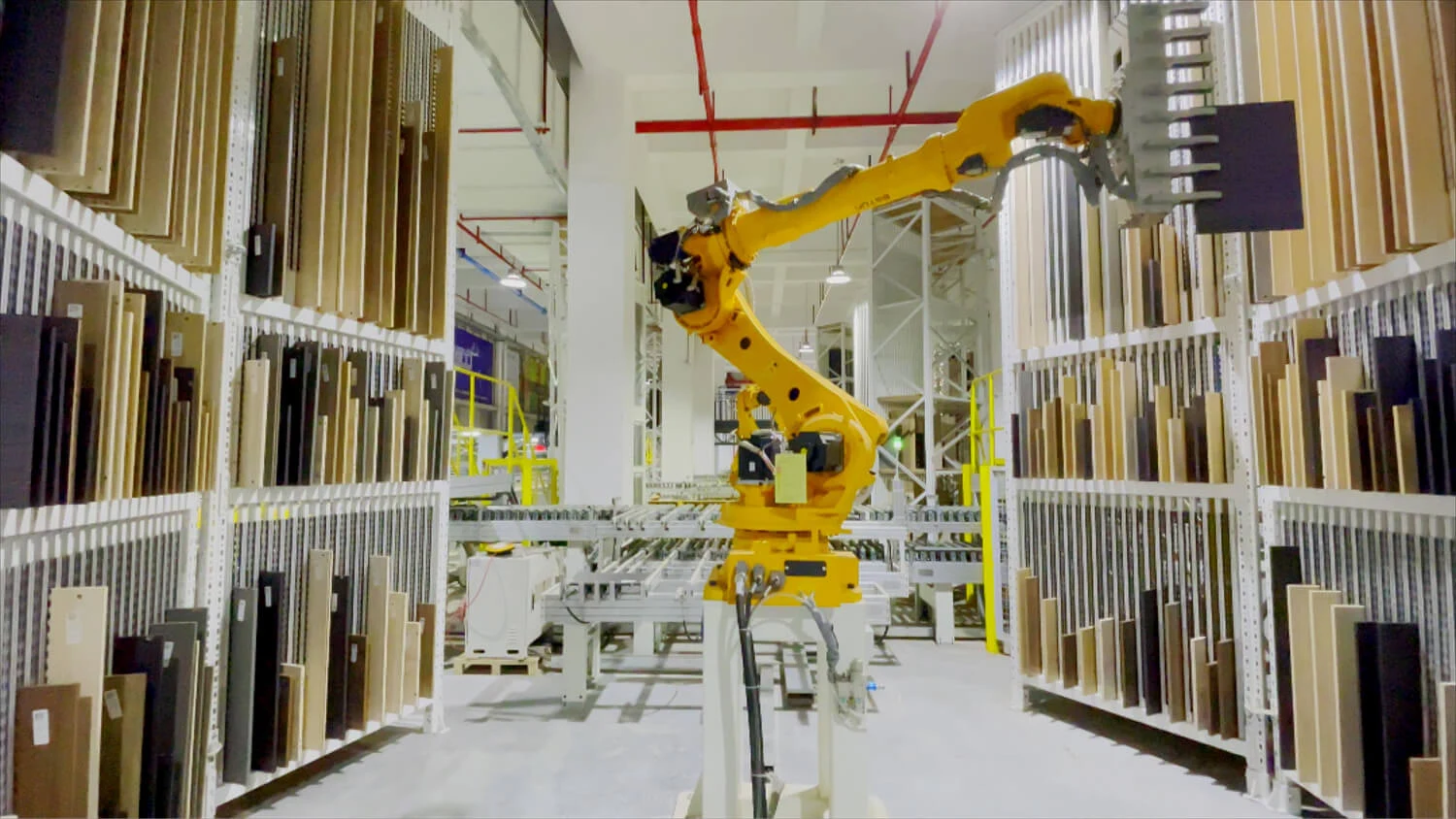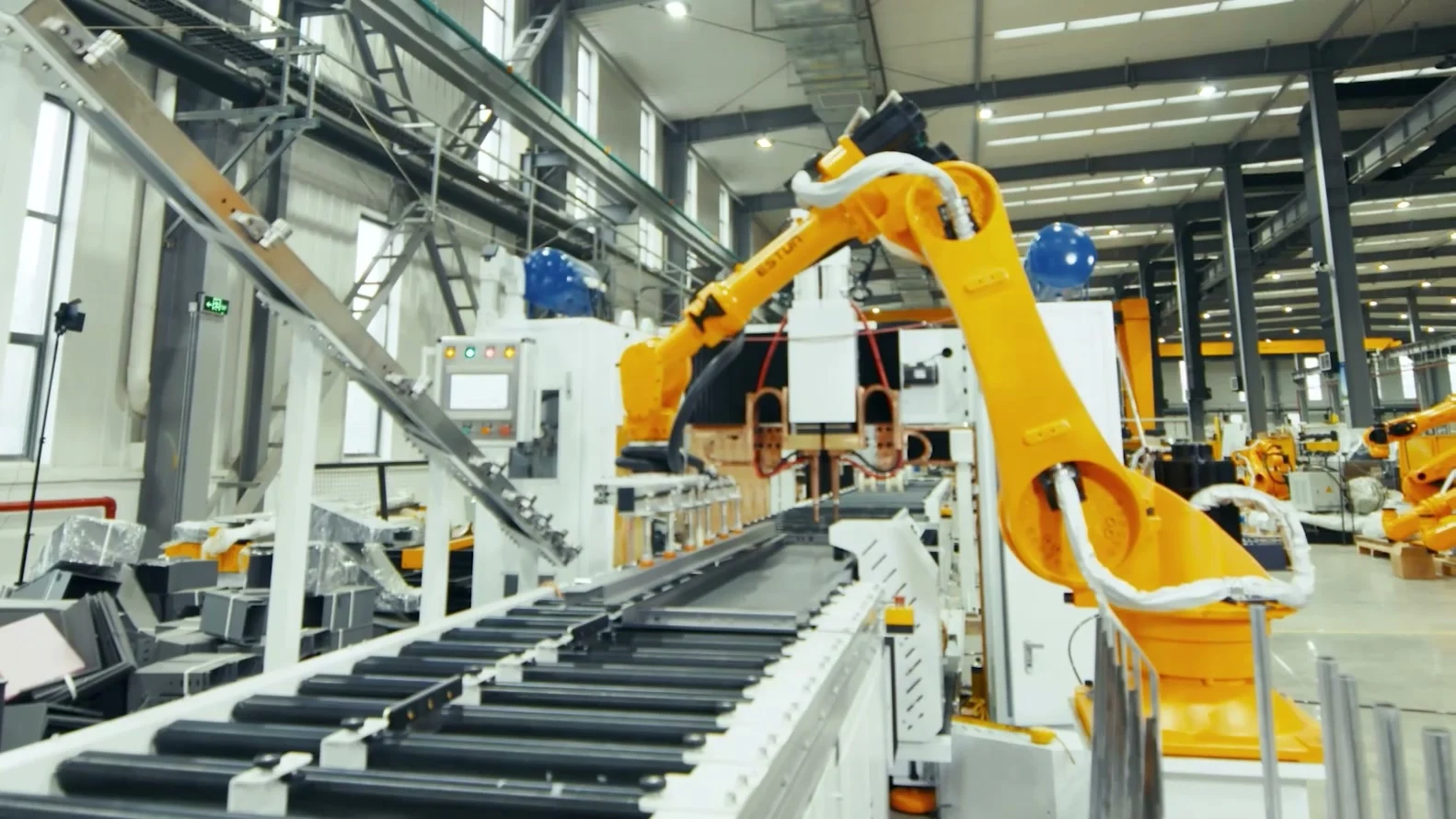
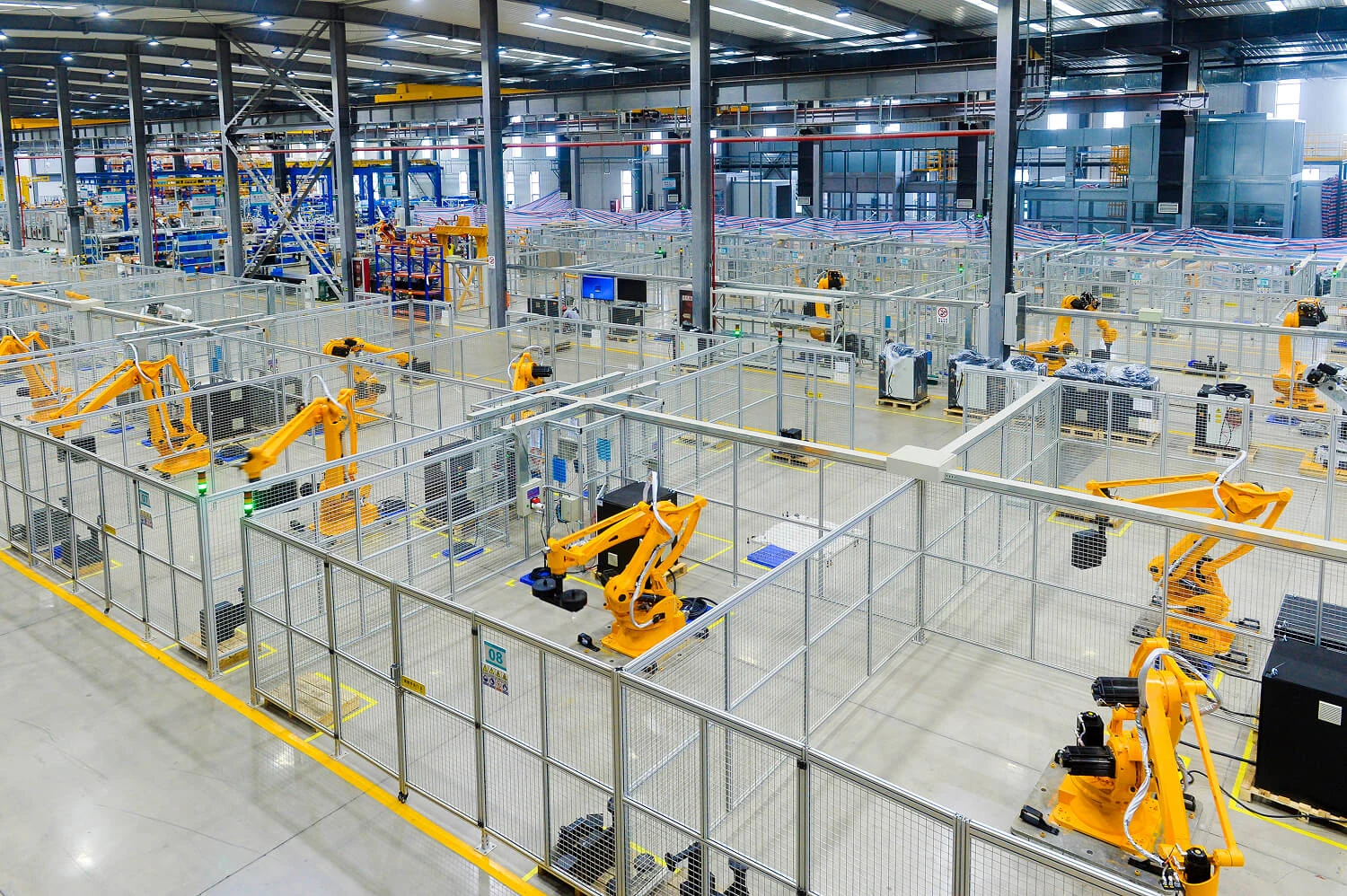
A cell transfers cast parts from an output station to an unloading or inspection area. This scenario covers part handling. It assumes neither molten-metal handling nor undocumented thermal resistance.
Production requirements
Context to assess.
The part arrives in a defined position, with surface condition and temperature requiring characterisation. The robot picks it up and transfers it to the next stage. Dust, splash, fumes and release agents are study inputs. Vanguard distinguishes measured conditions, declared equipment limits and any additional protection. The photograph shows a general ESTUN workshop, rather than a foundry cell delivered by Vanguard.
Information to gather.
- Provide geometry and mass, gripping points, expected flash and variation in shape or orientation after release.
- Measure or document temperatures at pickup, exposure duration, splash and substances present. Identify foreseeable abnormal conditions.
- Describe output interfaces, unloading equipment, any cooling and interventions needed for cleaning, setup and maintenance.
Cell components.
Assess the ER30B-1810-P-CE and ER50B-2100-P-CE foundry variants. Their specifications distinguish an IP67 wrist from an IP54 main body; these ratings do not establish an allowable temperature.
Design gripping for actual surfaces, with retention confirmation. Review cable and hose routing, shields and exposed consumables.
Define exchanges with the upstream station and destination: accessible part, transfer permission, free position and fault. Thermal treatment or deburring remain separate stations requiring specification.
Operating sequence.
- Wait for the agreed output-station states, verify part presence and grip at the areas established in trials.
- Confirm retention before transfer. Follow a path that accounts for neighbouring equipment, possible drips and actual destination availability.
- Place the part, confirm release and report its status to the next station. A poor grip or occupied destination requires an identified recovery procedure.
Define acceptance.
- Trial representative parts under the selected exposure conditions. Record observed temperatures, grip retention, component condition and available supplier limits.
- Check the agreed faults and access for cleaning tasks. Acceptance records must state what was tested and which conditions remain excluded.
References to assess.
These documented references support the initial selection. Payload with tooling, inertia, usable reach and options must be checked together.
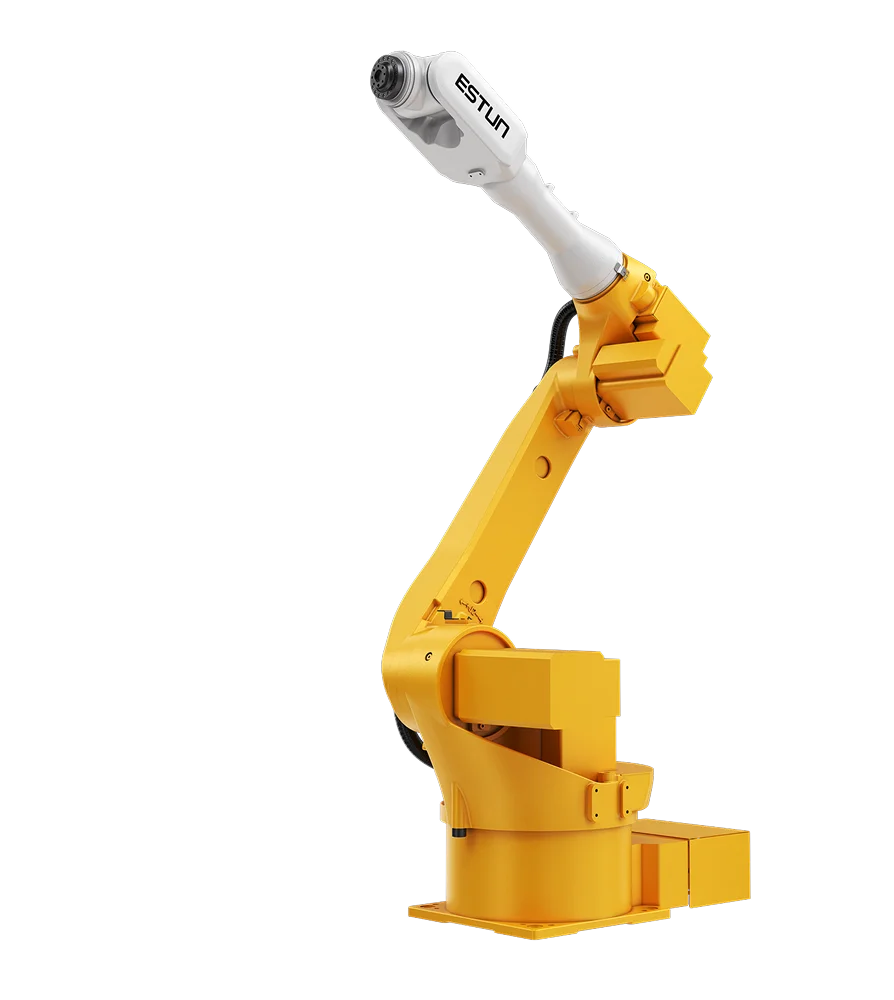 ESTUN ER30B-1810-P-CE
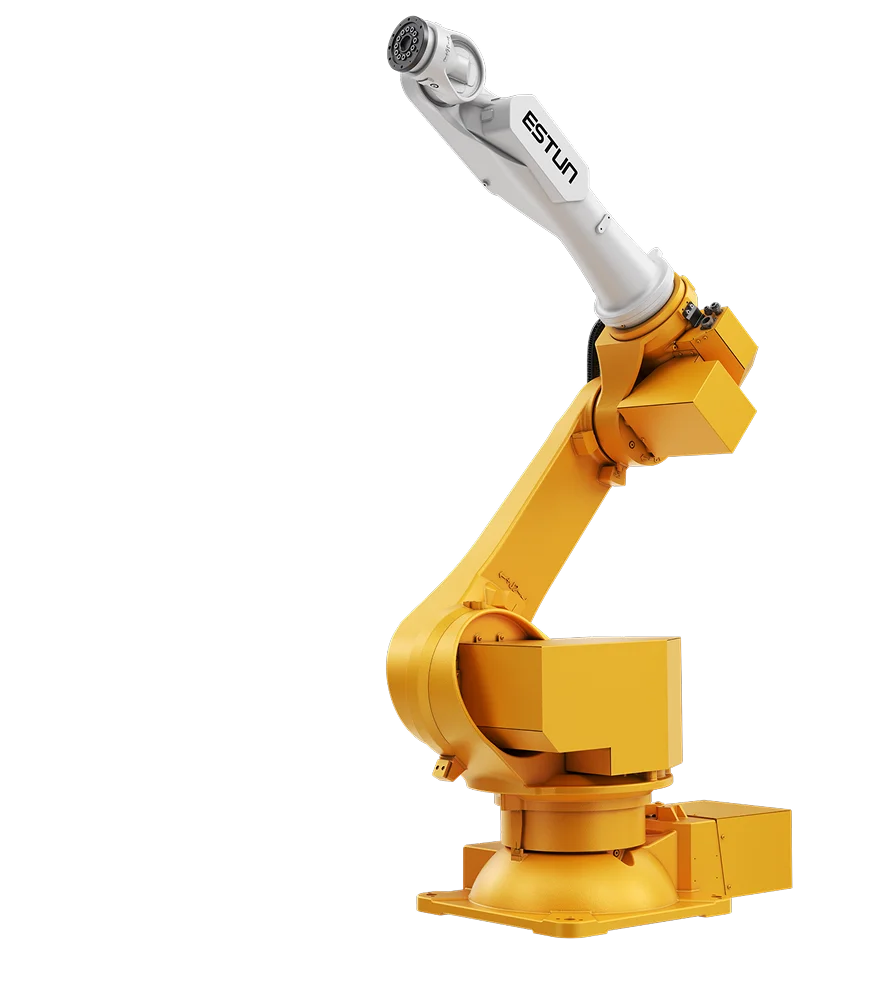 ESTUN ER50B-2100-P-CE
Common questions
Points to clarify.
Can the robot grip a hot part?
That depends on temperature, exposure and the complete arm, tooling and cabling assembly. Manufacturer limits and trials are needed to answer.
Does IP67 mean thermal protection?
No. The stated IP ratings do not define an acceptable part temperature. That value requires separate confirmation.