A family of welded fabrications is being considered for transfer from a manual sequence to an arc-welding cell. Workholding and the process require as much attention as robot paths. Weld results are not assumed in advance.
Production requirements
Context to assess.
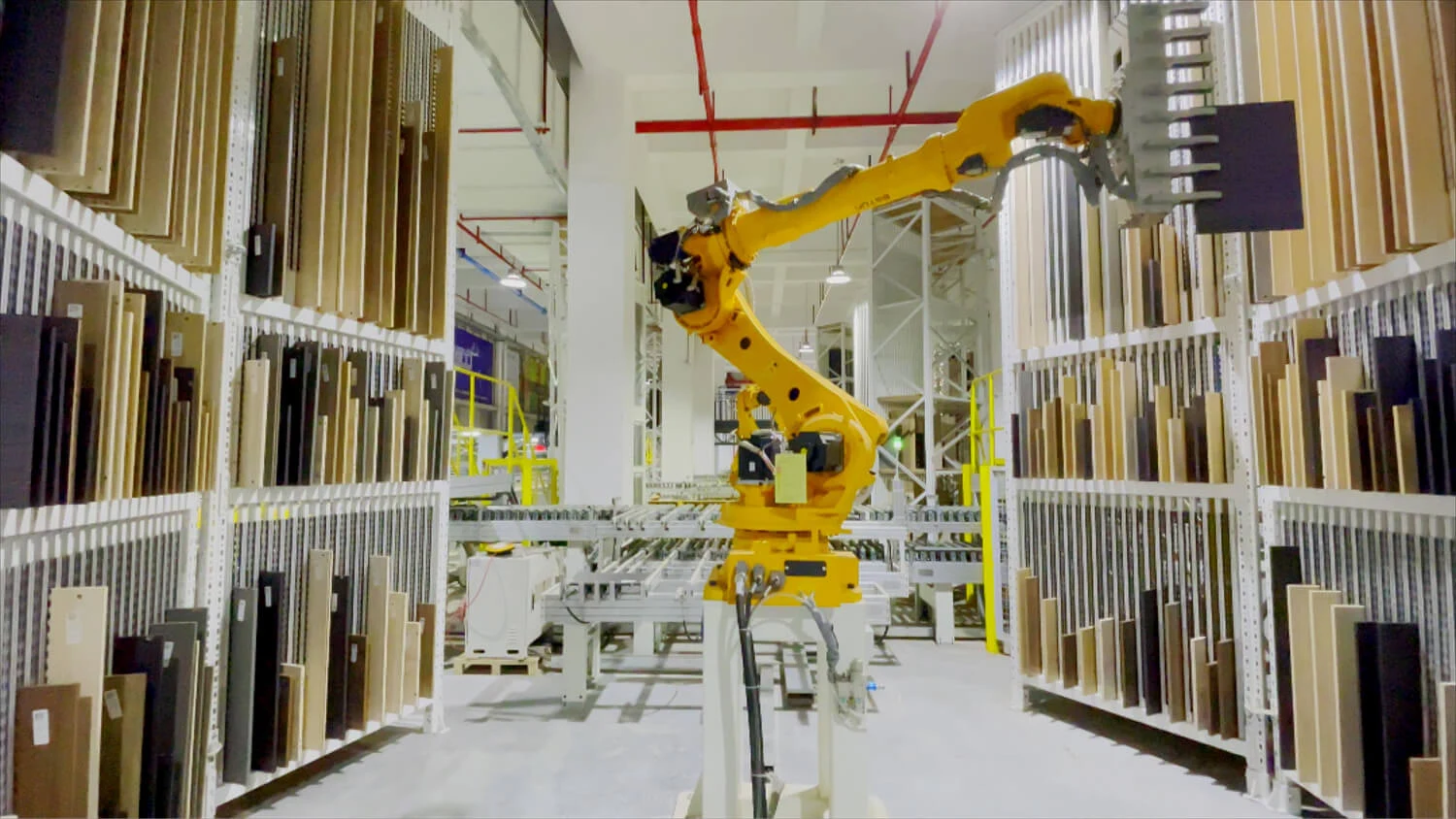
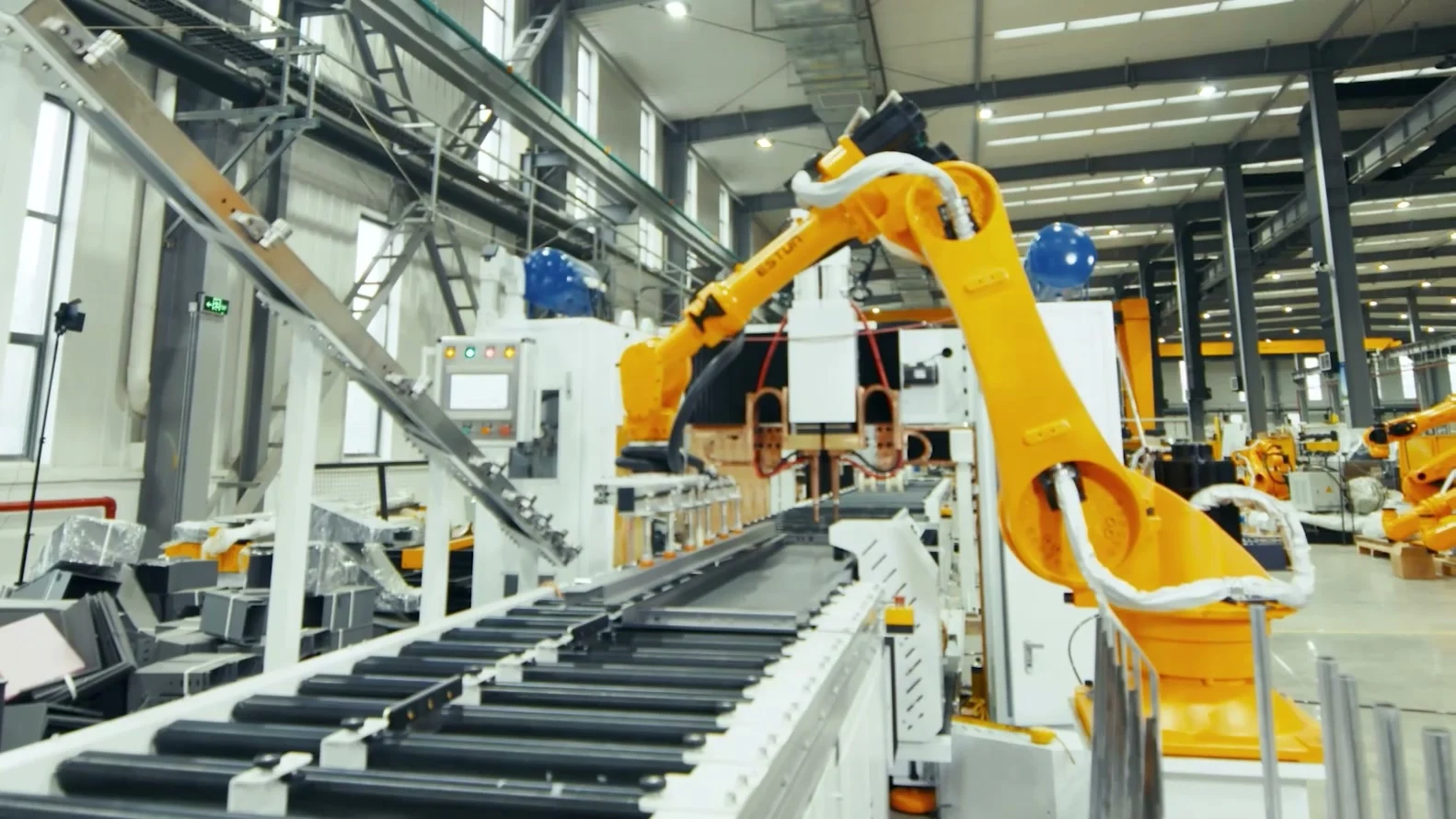
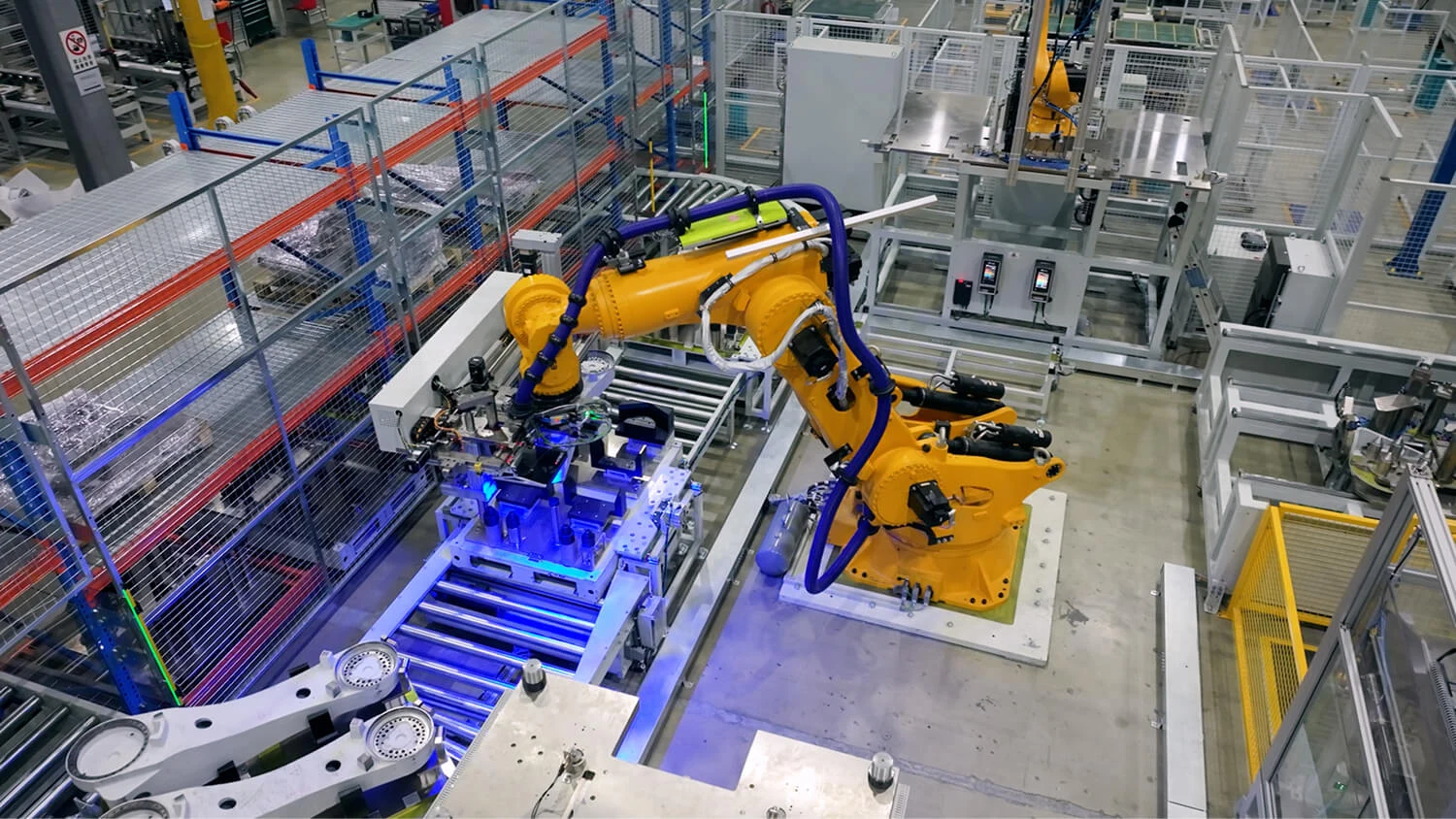
The operator prepares parts in a fixture, then the cell executes a defined weld sequence. This scenario supports a study of repeatable assemblies, rather than a promise covering every weldment. Vanguard examines joint-gap variation, torch access, distortion and required inspections with the process owner. The ESTUN industrial scene is illustrative; it is not a customer reference.
Information to gather.
- Supply assembly drawings, materials, thicknesses, joint preparations and representative parts, including variation actually encountered in production.
- Define welds, quality criteria, inspections, traceability and any required qualification framework with the people authorised to approve them.
- Survey utilities, gas, extraction, available space, part flow and preparation or finishing tasks that will remain outside the cell.
Cell components.
Assess the ER8-1450-HW-CE or ER8-2000-HW-CE welding arms. Their published reaches are 1,445 and 2,015 mm respectively; the torch must still be able to reach every joint.
Combine a compatible welding power source, torch and consumables, monitored fixtures and, where needed, a positioner with verified capabilities.
Define robot-to-source exchanges: process program, permission, ignition, welding state and fault. Include fumes, radiation and access in the cell design.
Operating sequence.
- Load parts against defined datums, confirm clamping and identify the recipe. The cell waits for the agreed conditions before starting its sequence.
- Move through checked approaches and execute welds using parameters validated in trials. A process fault leads to an explicitly defined recovery state.
- Complete the sequence, position the assembly for unloading and record the relevant status. Inspection and rework follow the agreed procedure without concealing an unaccepted part.
Define acceptance.
- Produce the agreed samples, examine joints and measure distortion against the inspection plan. Retain parameters, references and results with acceptance observations.
- Test ignition failure, a missing component and recovery from an interrupted cycle. Verify which events require renewed inspection before release.
References to assess.
These documented references support the initial selection. Payload with tooling, inertia, usable reach and options must be checked together.
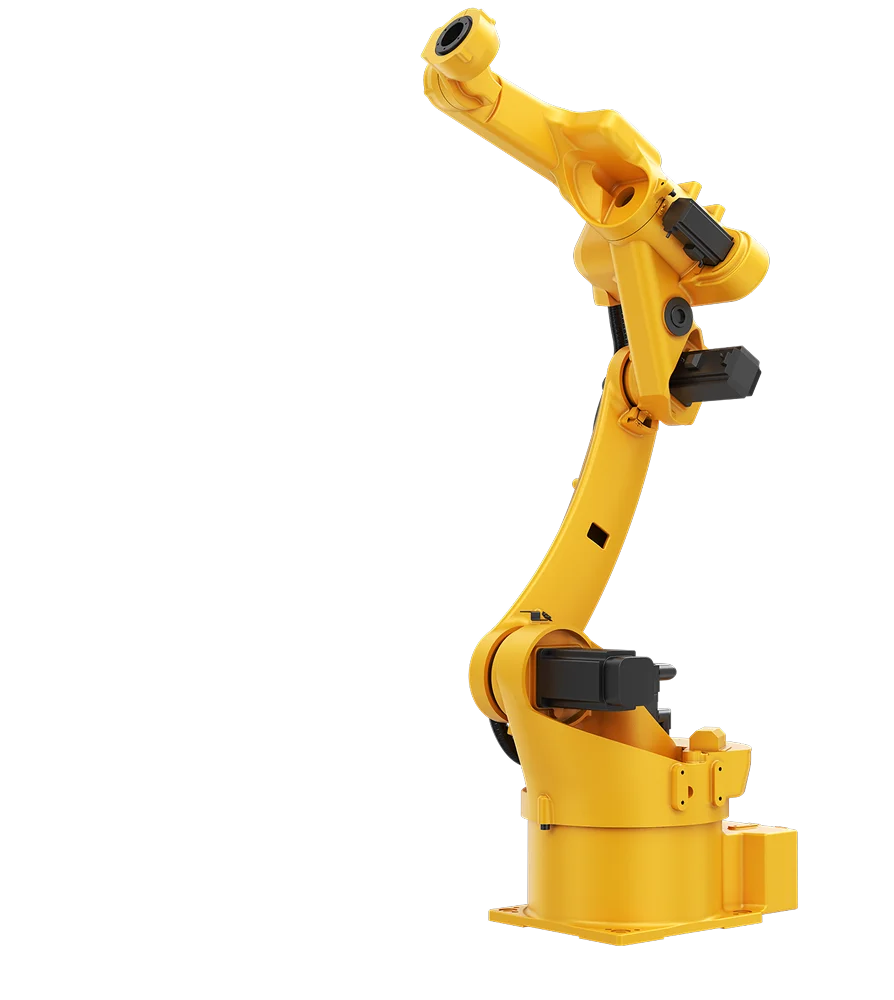 ESTUN ER8-1450-HW-CE
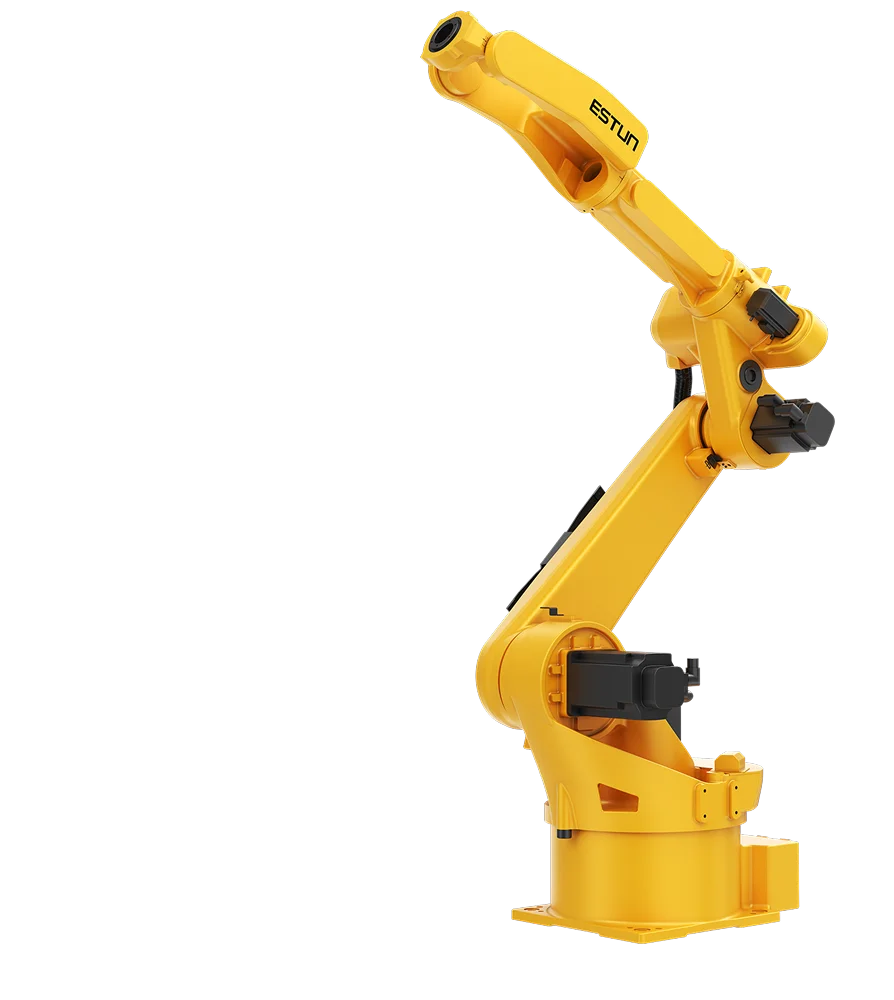 ESTUN ER8-2000-HW-CE
Common questions
Points to clarify.
Must fixtures be redesigned?
Their suitability needs checking. Torch access, clamping, part variation and distortion may require changes.
Does the cell provide welding qualification?
No. Qualification requirements and their execution must be agreed with the process owner and competent specialists.