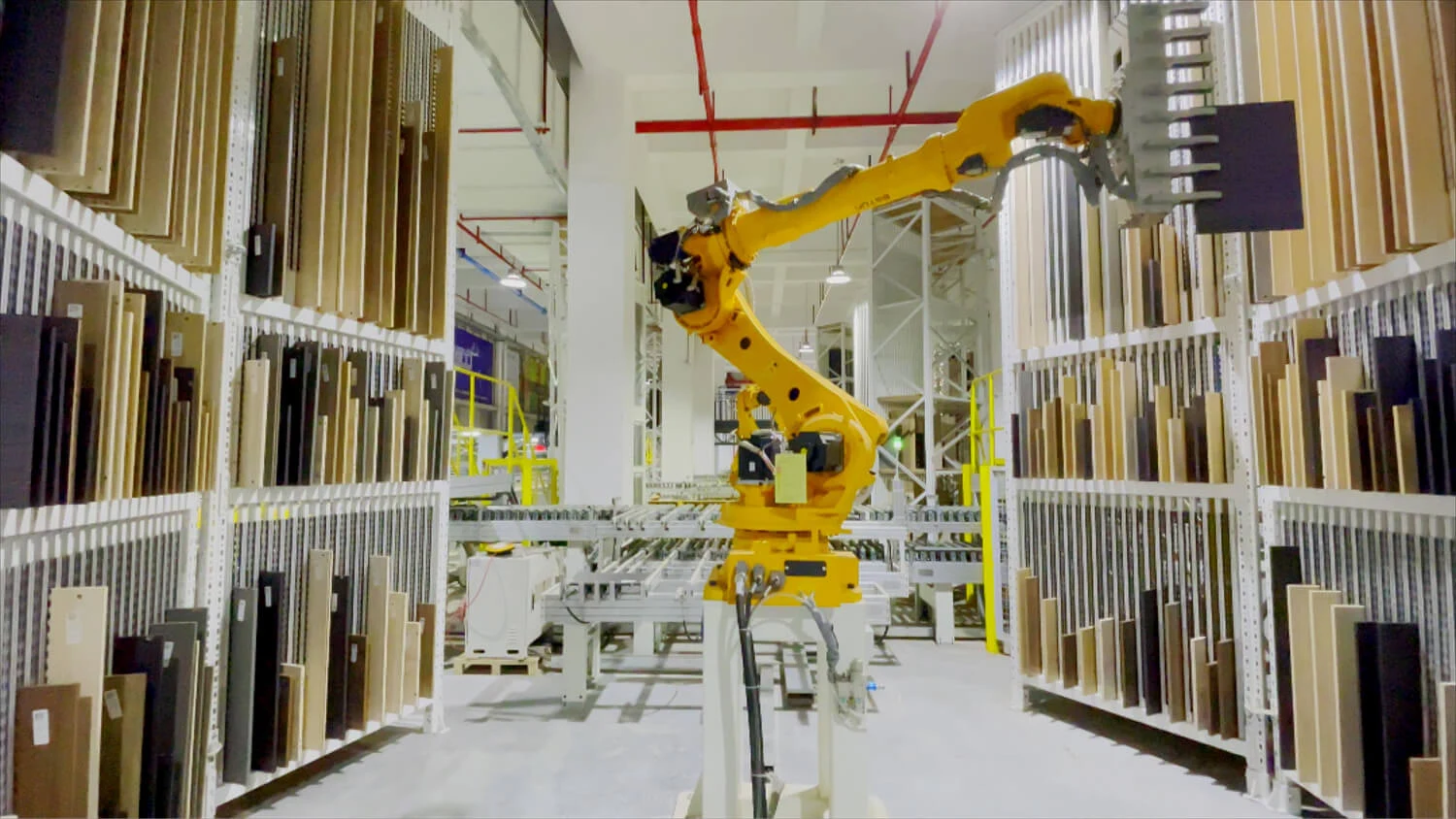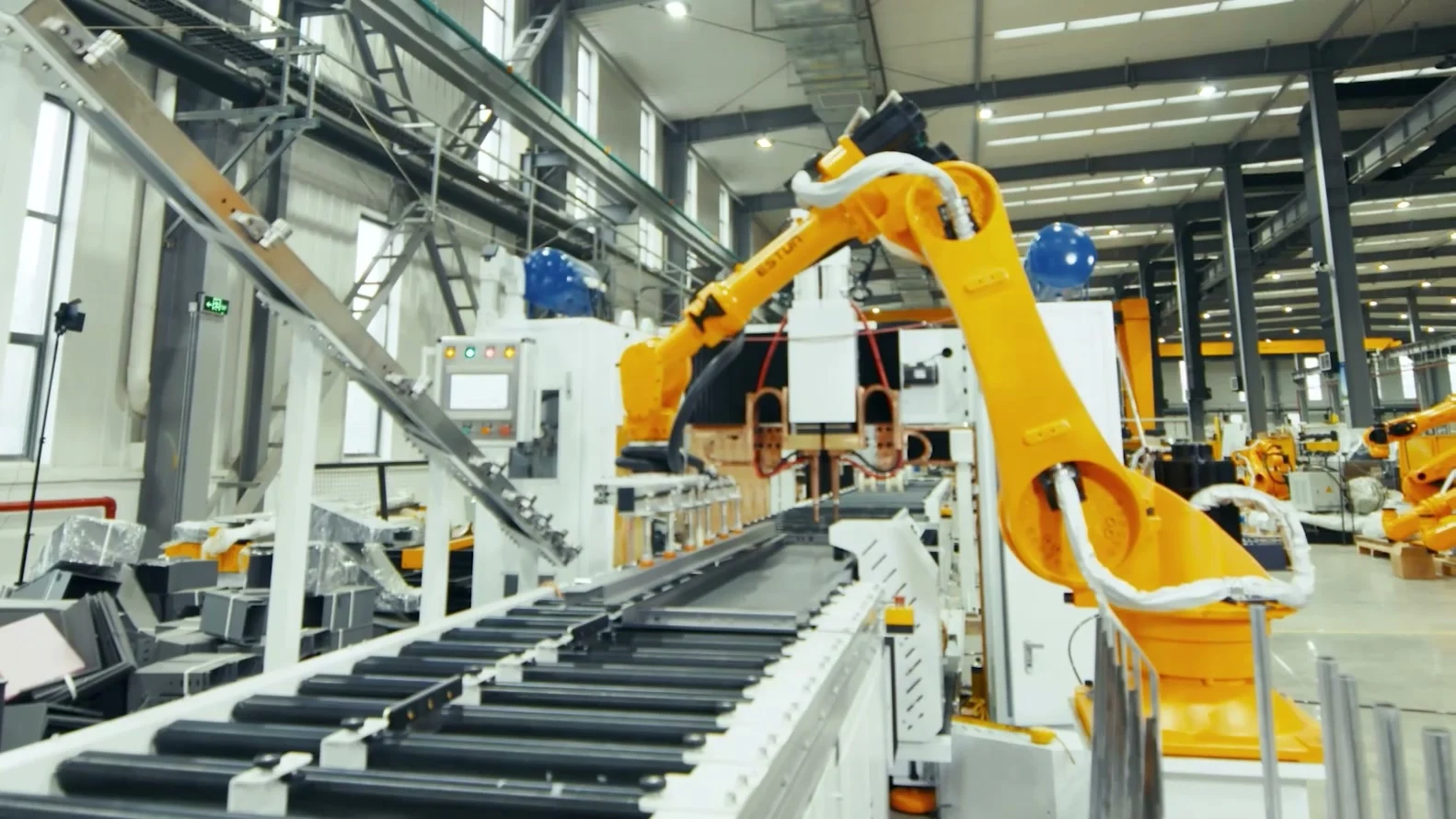
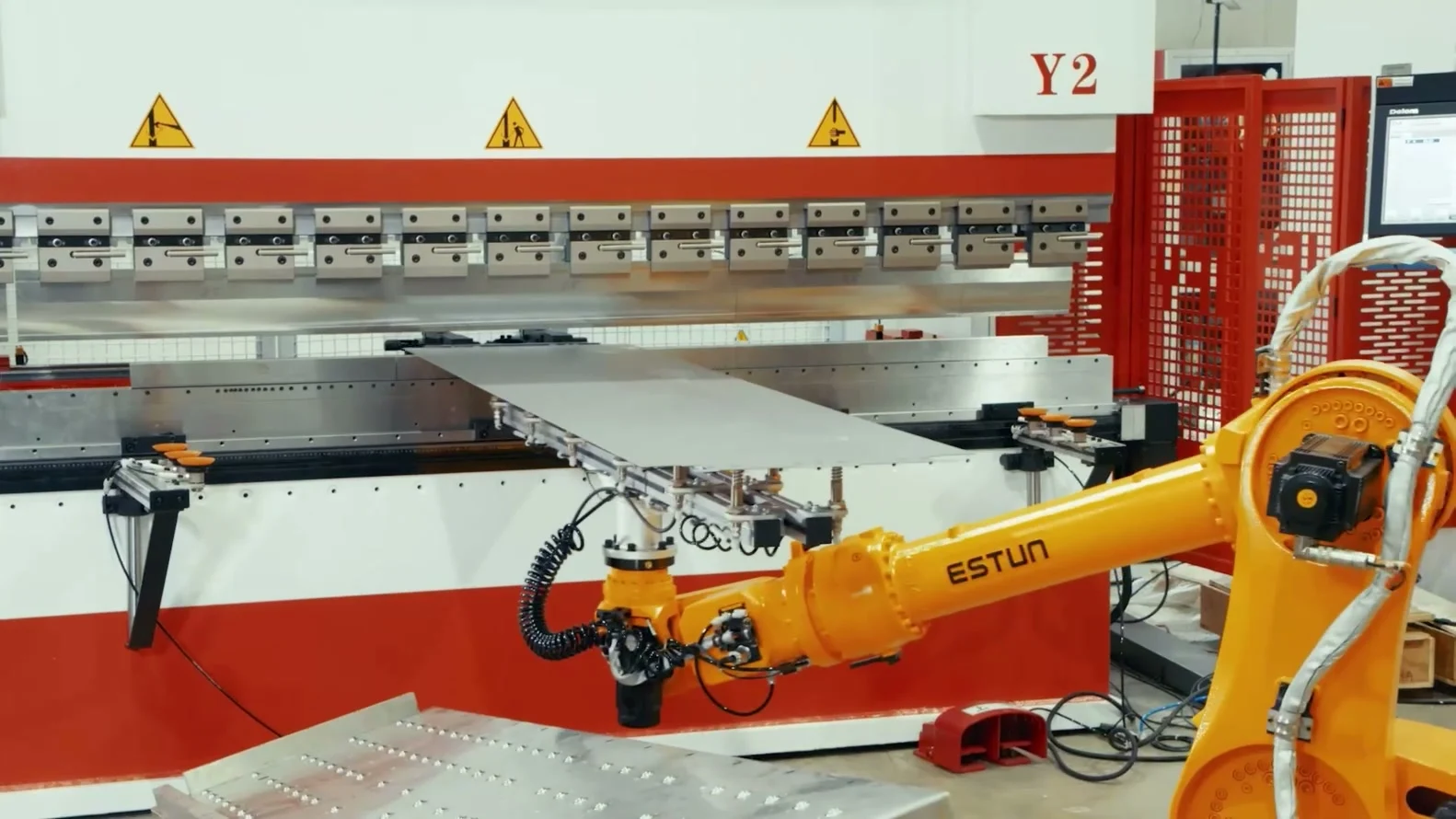
A robot supports a sheet through successive bends and then places the formed part in an output location. Feasibility depends on the blank, gripper and access to tooling. Arm selection follows that analysis.
Production requirements
Context to assess.
This scenario concerns batches with identified geometries and tooling changes. Some parts may retain manual intervention. Vanguard studies every step from the blank stack to output, including turning and regripping. The manufacturer scene shows a bending context; it does not prove compatibility with your press or a result achieved by Vanguard.
Information to gather.
- Provide flat and formed part files, materials, thicknesses, masses, angle tolerances and surfaces where gripping is permitted.
- Document the press, tooling, backgauges and interfaces, together with the positions and permissions available for robot operation.
- Describe stack condition, interleaving, possible sheet adhesion, batch changes and the required final stacking pattern.
Cell components.
Compare the ER45-2200-BD-CE and ER80B-2565-BD-CE bending variants. Catalogue payload alone is insufficient: a large sheet shifts the centre of gravity.
Assess gripping, blank separation, double-sheet detection and a regripping station if the sequence requires a new orientation.
Formalise press-to-robot exchanges: recipe, expected position, movement permission and step complete. Coordinated motion requires an interface confirmed by the suppliers.
Operating sequence.
- Separate a blank, verify that only one sheet has been picked and establish its reference. Resolve an uncertain grip before approaching the press.
- Present the sheet to the agreed references, wait for the expected press state and execute the bend under the validated sequence. Check clearance at every orientation change.
- Perform required regrips, complete the bends and place the part. Before changing references, confirm tooling, press program, gripper and robot recipe.
Define acceptance.
- Make the parts within the agreed scope and measure angles, dimensions, marks and surface condition. Document tooling configurations and associated settings.
- Check double-sheet pickup, grip loss, press faults and interruption between bends. The recovery procedure must identify the stage actually reached.
References to assess.
These documented references support the initial selection. Payload with tooling, inertia, usable reach and options must be checked together.
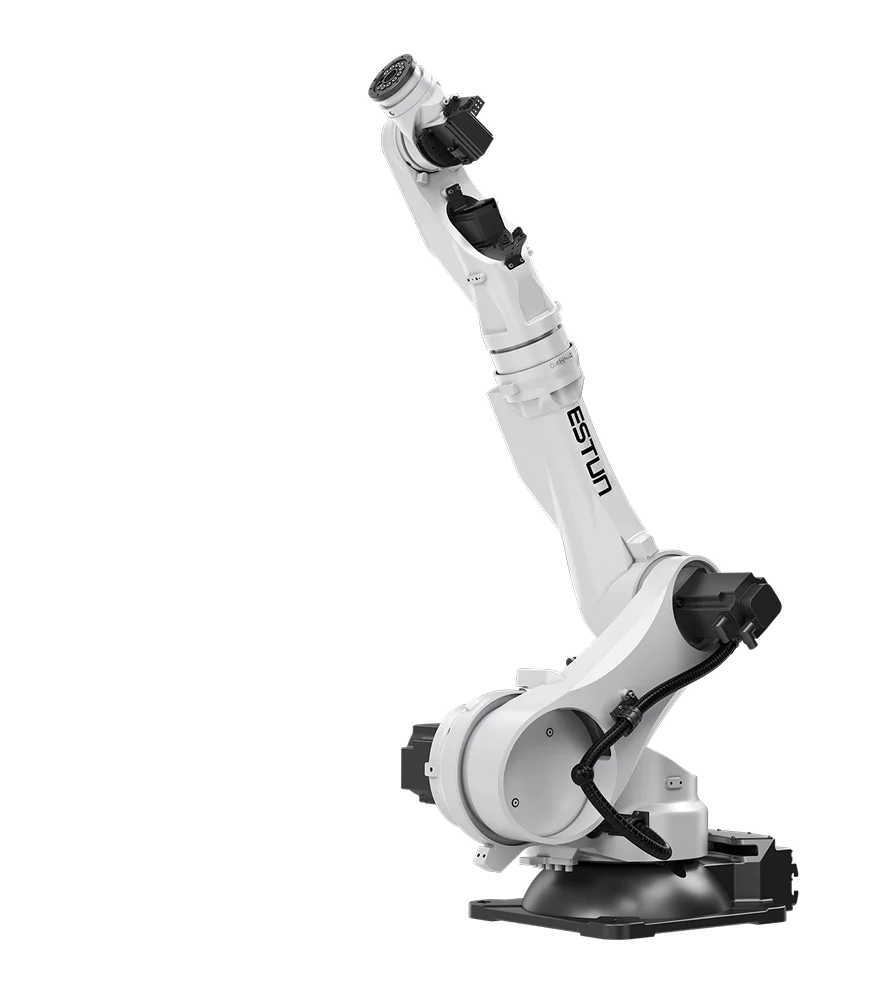 ESTUN ER45-2200-BD-CE
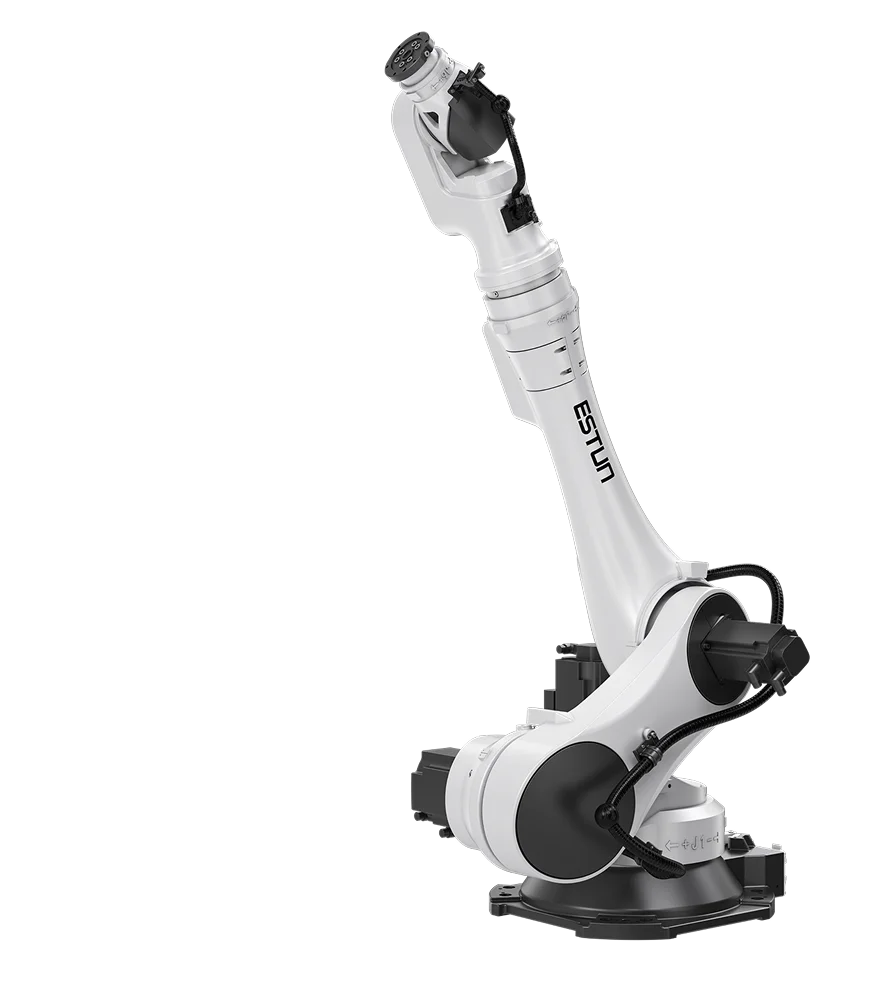 ESTUN ER80B-2565-BD-CE
Common questions
Points to clarify.
Can every part processed by a press be automated?
No. Access, successive grips, collisions and stability need checking for every part family.
Is tooling changed automatically?
This scenario does not assume that. Automatic tooling changes require additional equipment and scope, studied with the press supplier.