
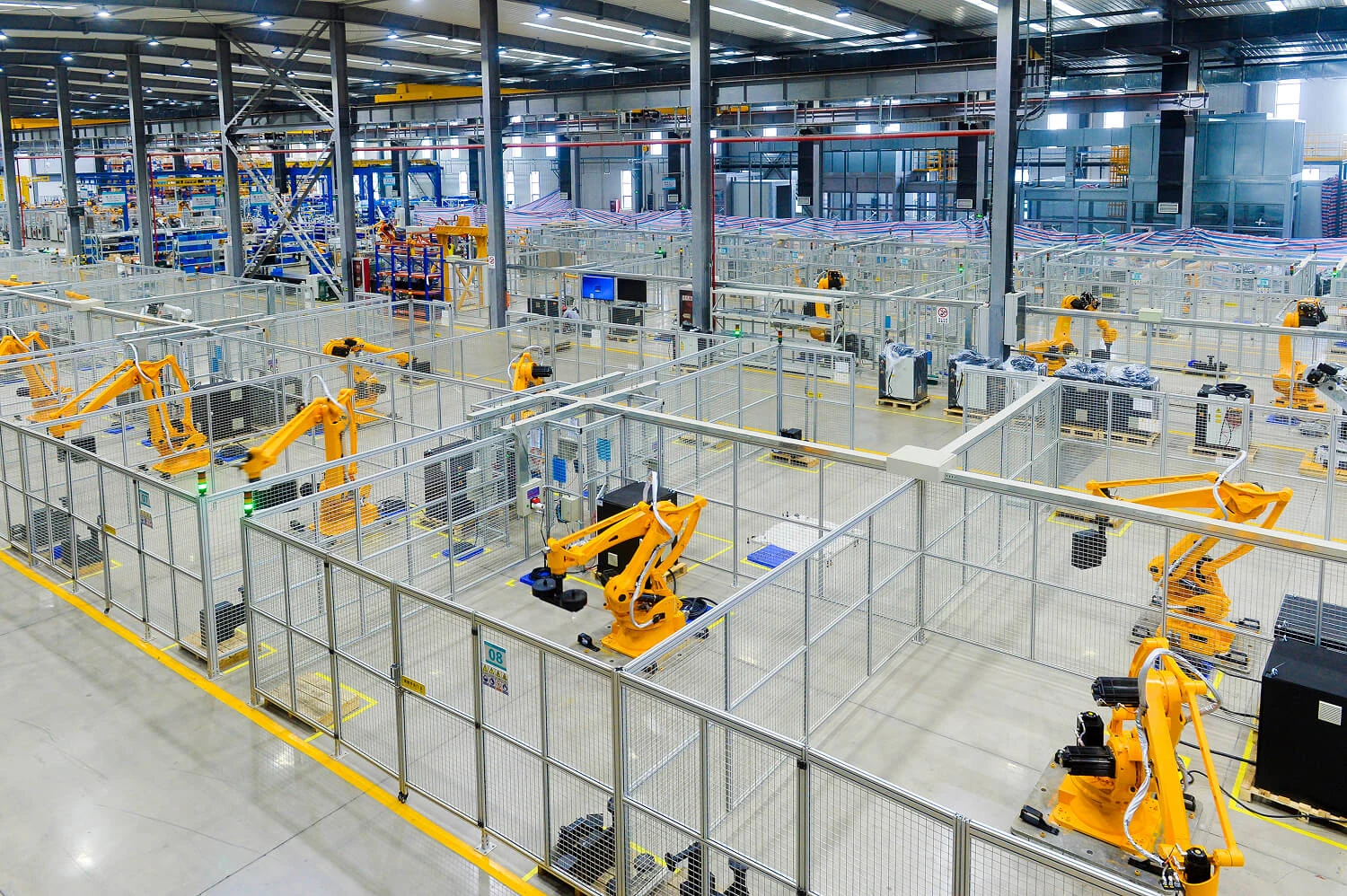
Vanguard Robotics is the robotics business of Vanguard Systems, an ESTUN integration partner in Switzerland. We start with the operation to automate and define the cell, its interfaces and acceptance criteria. This presentation outlines our proposed scope of work, from initial study to handover.
Start with the actual operation
Loading a machine, stacking cartons, welding an assembly or presenting a sheet each imposes different constraints. We examine parts, flow, interventions and the environment before choosing an architecture. The scenarios presented here describe architectures to assess and criteria to validate using your parts.
To begin, provide drawings, representative samples, the intended objective and known workstation constraints. We distinguish established data from assumptions requiring trials. The first deliverable should make clear which options deserve testing.
Select an arm and configuration
The documented ESTUN portfolio includes articulated arms, SCARA robots, palletisers and variants for metalworking. We compare candidates against the useful working envelope, carried mass, required orientations and operating conditions. The catalogue provides verifiable starting points.
Selection includes the workpiece, gripper, cables and applied loads. Maximum payload does not guarantee capacity for every movement. We retain the exact reference, generation and specification caveats; the supplied configuration is confirmed in the quotation.
Design the cell around the process
The arm becomes part of an assembly: gripping or process tooling, fixtures, conveying, controls and inspection equipment. We define each item’s role and its interfaces. Missing parts, uncertain clamping and occupied destinations need planned handling.
Access, setup modes and cleaning tasks are considered with the layout. Risk assessment addresses the entire installation and its uses. Protective functions are specified for the project; they do not follow automatically from choosing a robot.
Connect robotics to your workshop
A new cell may operate alongside existing machines. We survey their states, permissions and interfaces with their suppliers. The interface agreement states who requests an action, who permits it and how completion is confirmed. Stops and recovery are part of that agreement.
Scope may include programming, recipes, vision or workstation modifications, depending on the confirmed requirement. Changes and each contributor’s responsibilities are documented. A protocol listed in a specification does not by itself establish compatibility with every production machine.
Verify against agreed parts and criteria
We propose defining acceptance criteria before final programming. Part references, quality checks, cycle measurement and fault cases are identified in a protocol. Trial observations establish whether the objective has been met or a correction is still required.
Acceptance at the integrator and on site take place under different conditions. Deviations, reservations and outstanding tests belong in the records. Production gains, comparative prices or financial payback are not presented as established results without measurement.
Prepare for operation and the next steps
Handover should make it possible to recover a known configuration: programs, relevant parameters, versions, backups and recovery procedures. We define documentation and instruction around operator and maintenance roles. Follow-up services are specified in the quotation.
To proceed, describe an operation, the relevant parts and the available workstation. We can then define the feasibility study, required trials and interfaces to confirm. The project starts with a concrete question and a method for checking the answer.